Li Xianting: The Artist
This post is also available in:
 简体中文 (Chinese (Simplified))
  English
After graduating from the Chinese Painting Department of the Central Academy of Fine Arts, Li Xianting (b. 1949) worked as an editor for Meishu Art magazine and the Chinese Fine Arts Newspaper during the 1980s and later co-curated the China/Avant-Garde Exhibition in 1989. He has remained active in contemporary art scene as an editor, independent critic, and curator since the 1990s. In the afterword to one of his essay collections, Li candidly noted that, rather than merely engaging in theoretical generalization, his practice of capturing and evaluating contemporary issues is closer to an artist’s creative process.
For Li, defining “what art is” cannot resolve how standards of value are formed or understood. This concern also lies at the heart of his essay “What Matters Is Not Art,” which provoked discussion and reflection more than it offered definitive answers. Li contends that only through sensitivity to lived experience, an awareness of autonomous consciousness, and continual reassessment of the shifting relationship between art and the present can one genuinely confront art’s internal problems. His criticism rests on a fluid conception of value systems and the continual destabilization of their foundations—an approach that is both central to his intellectual practice and to understanding his decades-long engagement with contemporary art.
Li’s vision of the dynamic internal constructions of art opened a vast field of practice for him, allowing his work to exceed the conventional boundaries of editing, criticism, and curation, which might otherwise limit it to producing magazine sections, provoking debates, or posing critical questions. As a leading figure in emergent movements, he engaged in self-dialogue—often through writings under pseudonyms—to critique the internal problems of those movements from within their own discourse. In the exhibitions he curated, he resisted repetitive narratives and foregrounded tensions and tendencies emerging directly from the artistic scene, seeking the focal points of his era. Although his practice moved fluidly among publishing, criticism, and curation, it was always anchored in an exploration of art’s internal driving forces. In this sense, Li worked continuously at the verge of established boundaries, imaginatively discovering new possibilities in extreme expressive spaces, much like an artist.
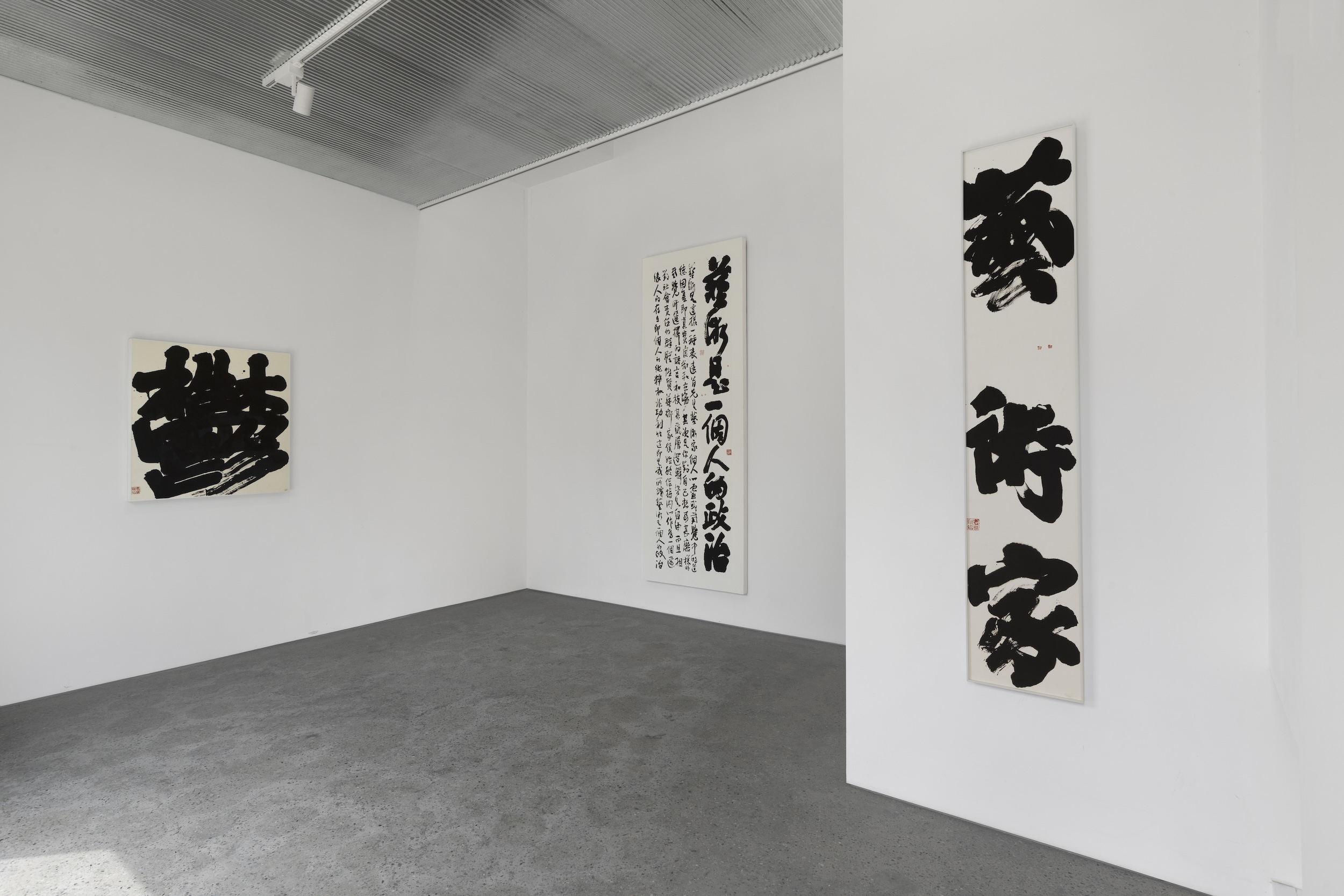
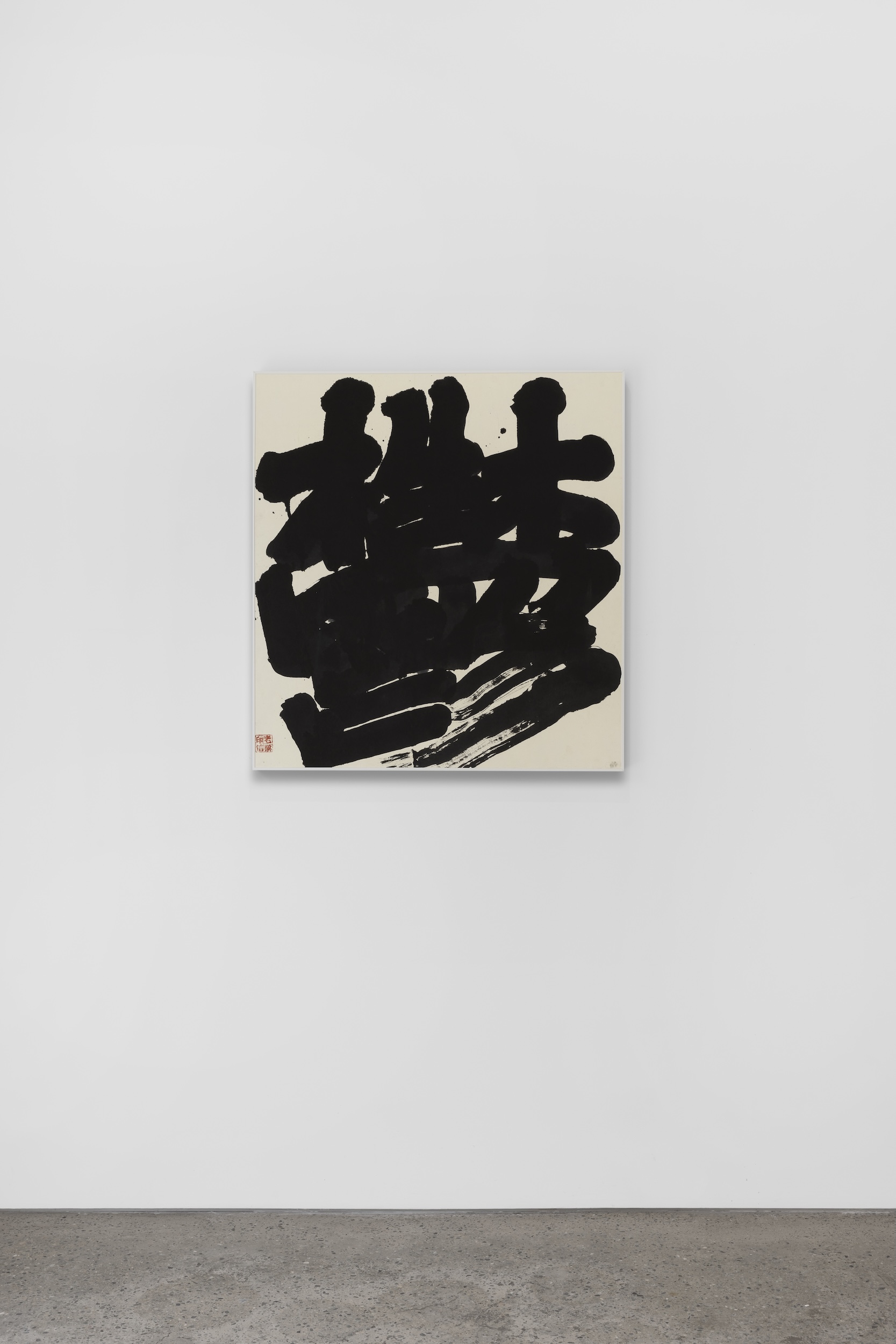
Although the globalization of art and other circumstances have made it seem that Li gradually withdrew from the contemporary scene, his recent calligraphic works tell a different story. His sincerity and deep concern for the artist’s inner world are evident in the highly expressive, oversized characters that dominate his paper. These works continue his earlier engagement with art’s political and intellectual terrains. In this sense, Li has never truly left or distanced himself from the field; the experiences and reflections he has internalized keep questioning the art world.
Today, relationships and symbolic structures established through the experience of neoliberalism are gradually loosen, while the fractures underlying the logic of so-called universal experience have become fully visible. As a result, the necessity to reexamine art historical narratives once taken for granted has become increasingly urgent. Art’s capacity for self-reflection and self-adjustment directs toward the possibility of a necessary reboot amid a moment of instability, as well as a renewed search for subjectivity under turbulent conditions. The deeper motivation behind Li’s work—his insistence on creating a space for further thought and judgment—lies fundamentally in a recognition of the construction of a new subjectivity.
It also constitutes the fundamental motivation behind this research-based revisitation of Li. Titled “The Artist”, this exhibition unfolds around a combination of Li’s recent creations and his past artistic practice. By reexamining the internal motivations of his artistic practice—positioned outside both traditional value system and Western standards—the project seeks to understand his methods of provoking discussion and amplifying the complexity of problems during moments of upheaval, transforming such experiences into a means of dialogue with the present. Such revisitation is not only an interrogation of Li’s past, but also an inquiry of our own experiences in the present moment.
Curated by Yin Shuai